
| Form Factor: Full-size | Switch: Beamspring | Connector: DB-25 |
| Dimensions (cm) (W x H x D): |
|
| Weight (Kg): |
|
| Price: |
|
| RGB Lighting: | No |
| Media Controls: | No |
| Macro Keys: | No |
| Removable Cable: | No |
| Windows Lock: | No |
| Keyboard Status: | Partially working* |
The IBM “Model B” are keyboards which featured the now very renowned IBM Beam spring switches – a plate spring capacitive clicky switch. These keyboards are large, heavy and considered to be very well-built – some even came with solenoids to make them even louder!
In the current market, these keyboards can fetch a price tag of up to £2500 depending on the specific model and their condition. Generally, the IBM 5251 is the most common model and one of the easiest to convert to USB.
NOTE: The IBM 5251 in this review has been converted to USB. However, I did not the keyboard on a daily basis as with most keyboards due to missing features I use on a daily basis. Plus, the conversion had intermittent issues which made it harder to use. This means I only really used the keyboard for occasional testing purposes. Please keep this in mind.
TL;DR
Given the insane cost of the keyboard (plus converter if need be), it wouldn’t be very practical for me to recommend this keyboard, especially not for everyday use. This is really for the enthusiast – preferably one with a lot of money.
Although, unlike most keyboards, there isn’t one out there with Beam spring switches. Sure, there are Beamspring keyboards on Model F Keyboards which are roughly 2-3 times cheaper than an original IBM Beam spring keyboard, but none have shipped at the time of writing this review. So, we could only speculate on their quality until they release.
Build Quality: 10/10
The entire keyboard is built exceptionally well.
The base is made of metal (steel?) with the top being made of a very thick and tough plastic. In fact, some parts of the plastic housing are thicker than my iPad!
The keycaps are double shot SAN or ABS and are extremely thick – 2.10mm to be exact and weigh 2.9g for a single keycap. In comparison, An R1 SA keycap is only about 1.31mm thick and only weigh 1.9g.
The cable is rather short and is non-removeable, but it’s very thick at 10mm – the thickest cable I know of!
Overall, this is as good as it gets. I’ll be surprised if anything even comes close to this level of build quality.
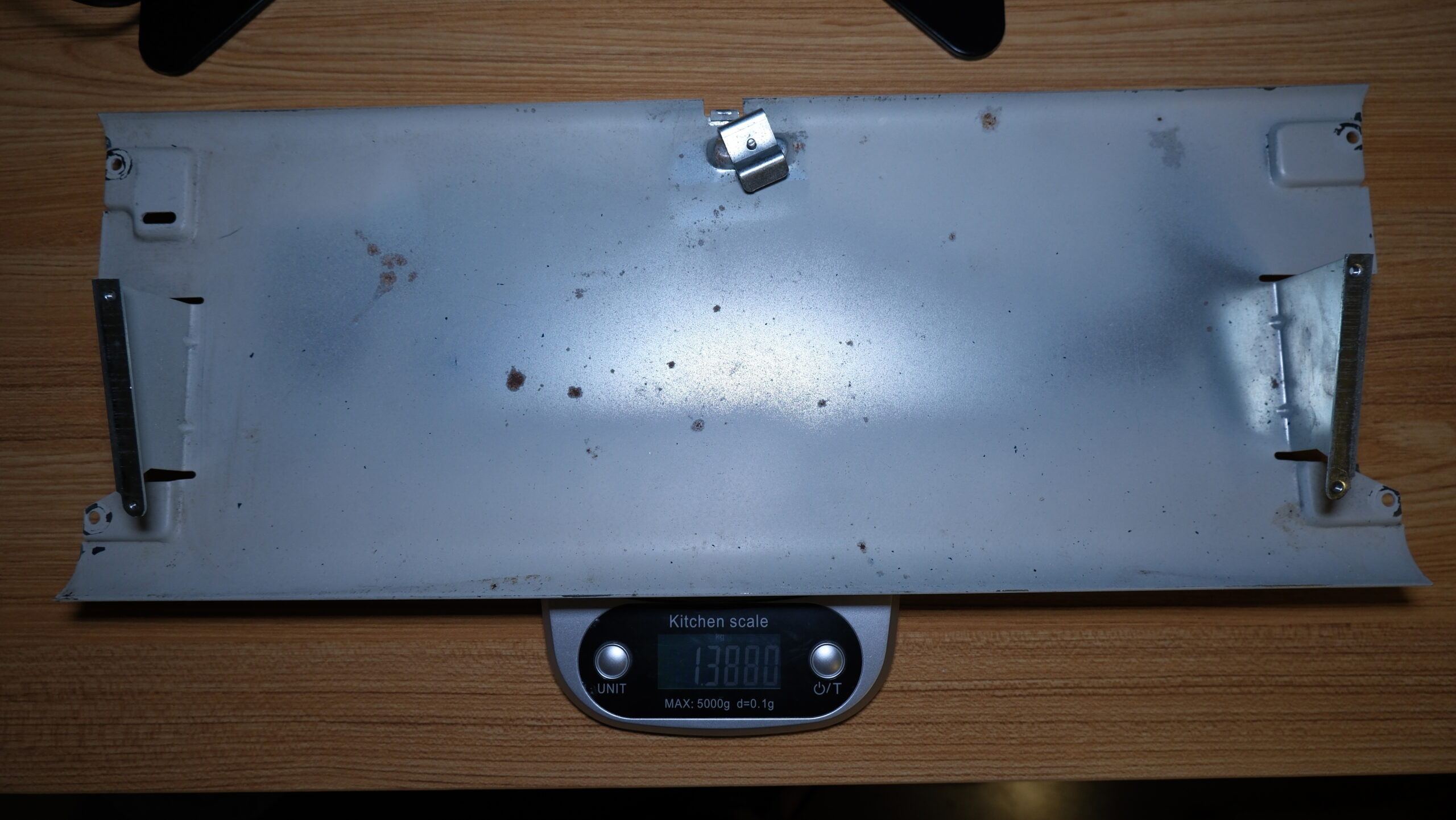 |
 |
|---|---|
 |
 |
|---|---|
Features: 2/10
It’s a vintage keyboard so, it is missing pretty much every modern feature, and even basic features like F keys, some modifier/nav keys and a USB connection. The keyboard doesn’t even have flip-out feet (not that you’ll be needing it).
Although, it has ONE outstanding feature which no other keyboard in the market has – Beam spring switches. In my opinion, the switches alone is what makes this keyboard special.
In a hypothetical world, if these had Cherry MX Black switches, they wouldn’t be as special to collectors and they certainly wouldn’t be priced as highly.
Additionally, my 5251 came with a solenoid making the switches even louder, and as far as I am aware, solenoids aren’t an inclusion in many modern keyboards.
 |
 |
|---|---|
 |
 |
|---|---|
Overall, it lacks lots of modern features, but it has beam spring switches. What more can you ask for?
Daily Performance: 4/10
As noted above, I only really used the keyboard for occasional testing purposes, so my review on this keyboard in this section will not be as in-depth as it normally would be. Please keep this in mind.
 |
 |
|---|---|
Firstly, given the height of the switches and the keyboard, the typing angle is very high. Typing angles are a matter of preference, but I’m not sure anyone would find the typing on these very comfortable.
Secondly, as mentioned above, it’s missing a whole bunch of basic keys. Although, the keys are all remappable with modern software, so this isn’t a huge issue, but I figured it was worth mentioning.
Lastly, the spacebar is heavier compared to the rest of the keys which could throw you off. The spacebar has two beam spring switches, so this could be the reason why.
Overall, as satisfying as it was to use Beam spring switches, this keyboard isn’t 100% adaptable in the modern world, which saddens me.
Reliability: 6/10
These tend to be very reliable, if they haven’t rusted to an oblivion that is.
My 5251 isn’t in the best shape given it has a couple of keys that don’t work and some of the switches don’t click or only click when pressed down at a certain speed.
Additionally, all my stabilizers have some level of rust on them, so keeping these maintained is the way to go to preserving them and increase their reliability.
Overall, even though Beam spring switches are more complicated than newer switches of today, they’re actually still very reliable. Plus, if a switch fails, it can be replaced easily.
 |
 |
|---|---|
Value: 4/10
The value of a vintage keyboard is always hard to assess given they aren’t in production anymore and the only price available are in second-hand markets.
Plus, IBM Beam spring keyboards are in a unique category in which they are the only keyboard to exist with Beam spring switches with no other alternatives hence the sometimes notoriously high price tags.
Also, many of these keyboards will need to be converted to USB if you wish to use them on a modern PC. Sure, it’s not super complicated process, but it does add cost to an already pricey keyboard.
The key selling point of these keyboards are definitely their top-tier switches, and maybe their build quality. So, if you’re looking for anything else, these are terrible value for money.
However, if you’re a vintage keyboard collector or you simply to want to experience one of the best switches ever to be produced no matter what, then these do hold some value.
Overall, this is one of the hardest keyboards to place a value on given there are no other alternatives like it. I guess I’ll just have to wait until the repro Beam spring comes out. I can’t wait!
Final Score = 26/50 (52%)
*partially working= Intermittent functionally due to a less-than-ideal USB conversion.