
| Switch Type: Linear | Mount: PCB Mount (5-pin) | Spring: Single Stage | Price: £13 (100pcs) on Akko |
| Top Housing: PC | Bottom Housing: PA66 | Stem: LY | Factory Lubed: Yes |
| Actuation Point (mm): | 2.0 ± 0.3 | Actuation Point (mm): | 1.84 |
| Actuation Force (gf): | 45 ± 5 | Actuation Force (gf): | 43.5 |
| Total Travel (mm): | 3.5 ± 0.3 | Total Travel (mm): | 3.41 |
| Reset Point (mm): | 1.0 | Reset Point (mm): | 0.86 |
| Bottom-out Force (gf): | 50 | Bottom-out Force (gf): | 44.5 |
| Stem Length (mm): | 13.54 | ||
DISCLAIMER | Please Read:
These switches were sent by Akko for review and testing purposes. No one paid me to write this review, and impartiality will always be a top priority here at KeebWorks.
TL;DR
The original Akko CS Piano was a fantastic offering at the time, with the only switch on the market being hand-lubed, which made it perform consistently in various tasks.
However, this isn’t the case with the new Akko Piano U1 – at least there is no mention of it being hand-lubed anywhere. Regardless, they’re still very smooth and consistent switches.
The specs also remain almost the same, but if you scroll down and look at the force curve comparison – with the Akko CS Piano being the slightly heavier switch overall, especially in the downstroke.
Smoothness: 9/10
On-centre keypresses are very smooth with only slight inconsistencies at very slow keypresses.
Off-centre keypresses are also very smooth with slight scratchiness at very slow keypresses.
Overall, it’s a step below the smoothest hall-effect switches on the market, but I still regard these as one of the smoothest switches on currently the market.
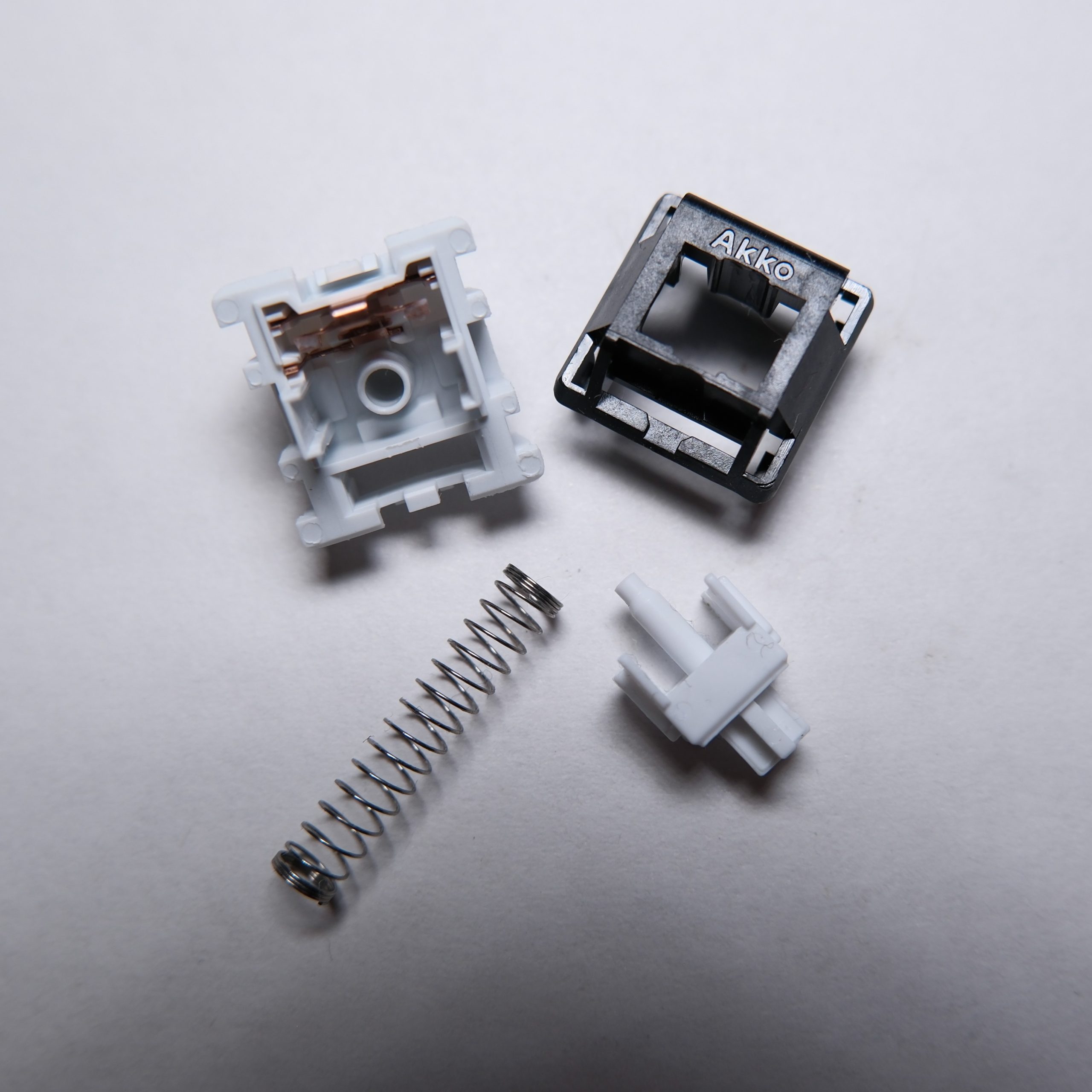
Akko Piano U1 switch disassembled.
Weighting: 5/10
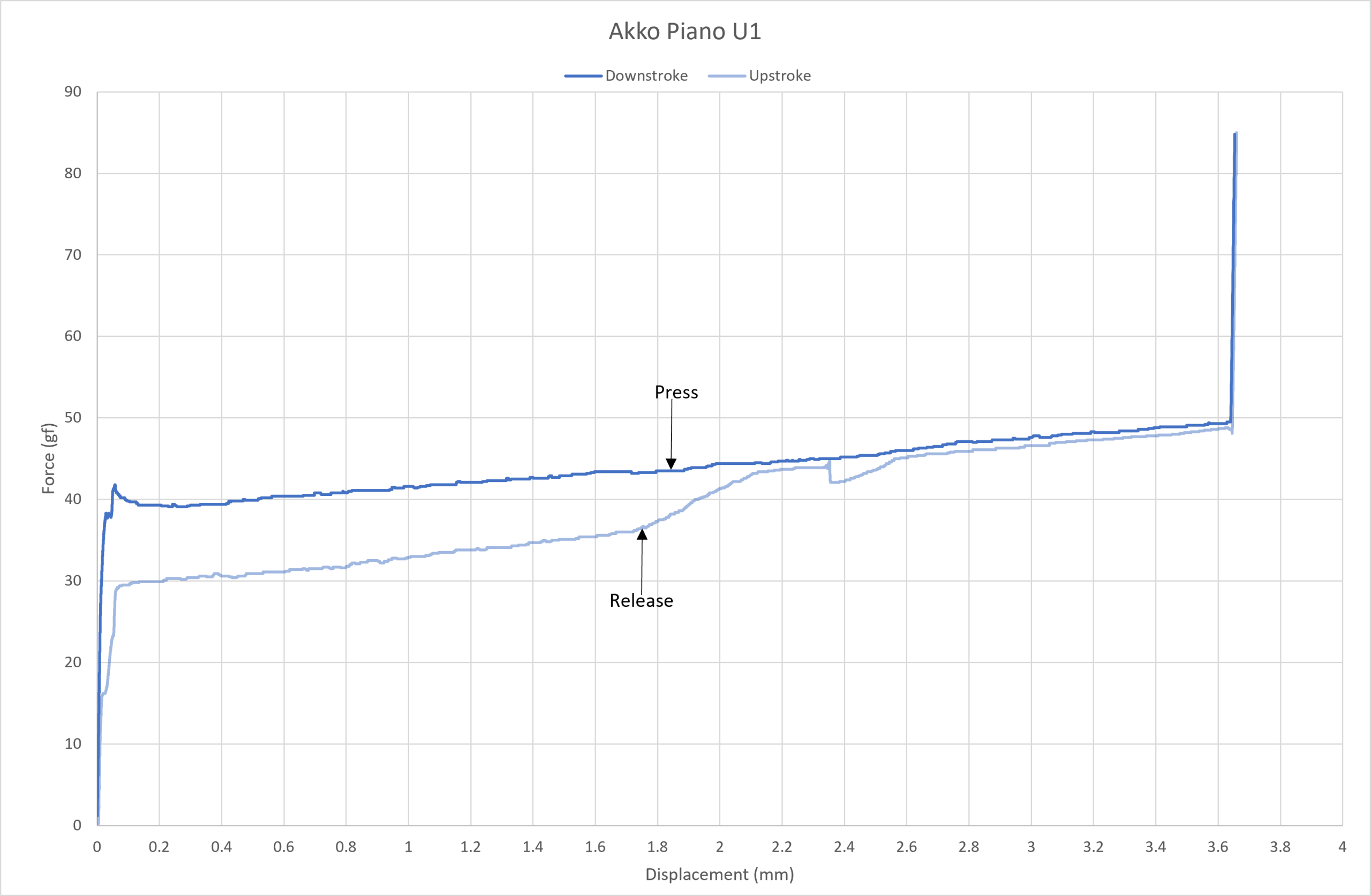
Now, according to Akko these switches have an actuation force of 45g at 2.0mm and a total travel of 3.5mm, bottoming-out at 50g.
Akko Piano U1 force curve.
As you can see from the force curve above, the Akko Piano U1 is on spec in all areas.
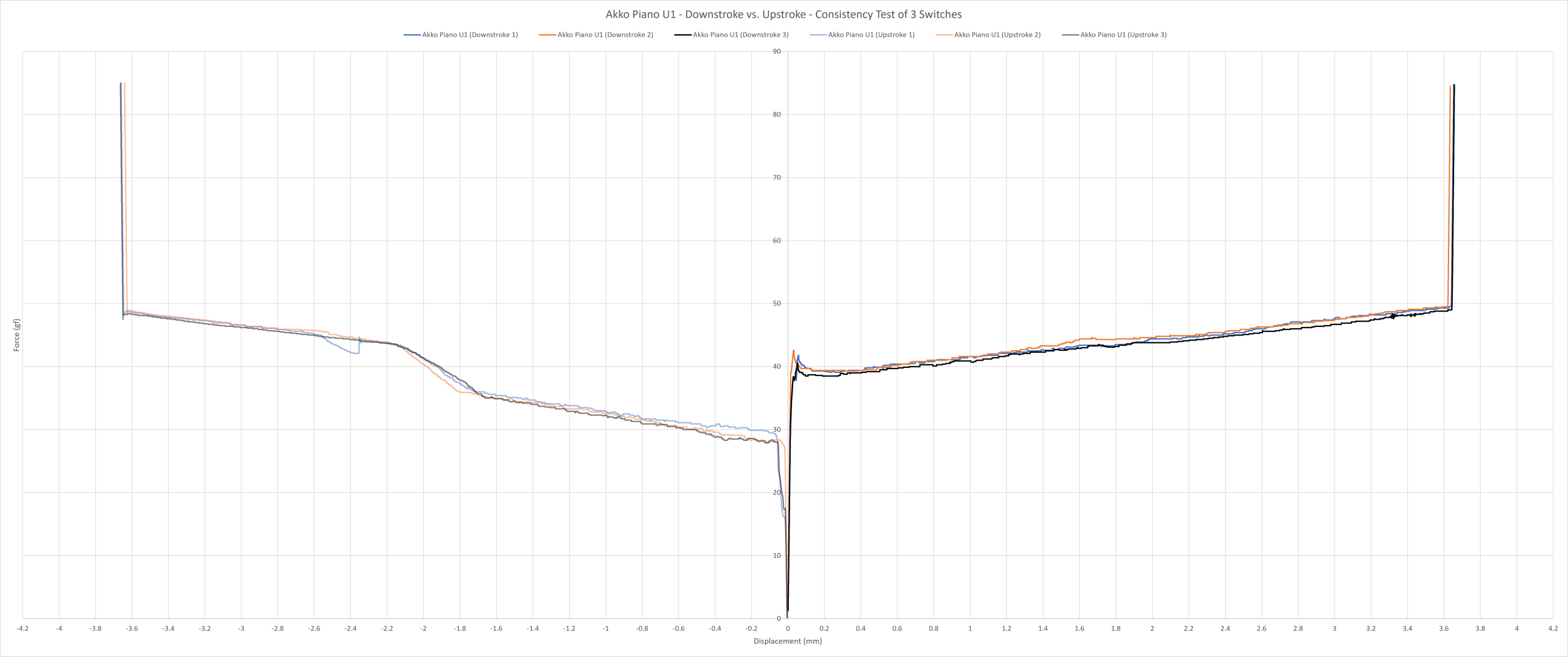
Akko Piano U1 consistency force curve.
As you can see above, the switches are very consistent with slight weighting variances between the 3 switches. Weirdly, there’s a small dip around 2.4mm during the upstroke of Switch 1, which I find a little strange.
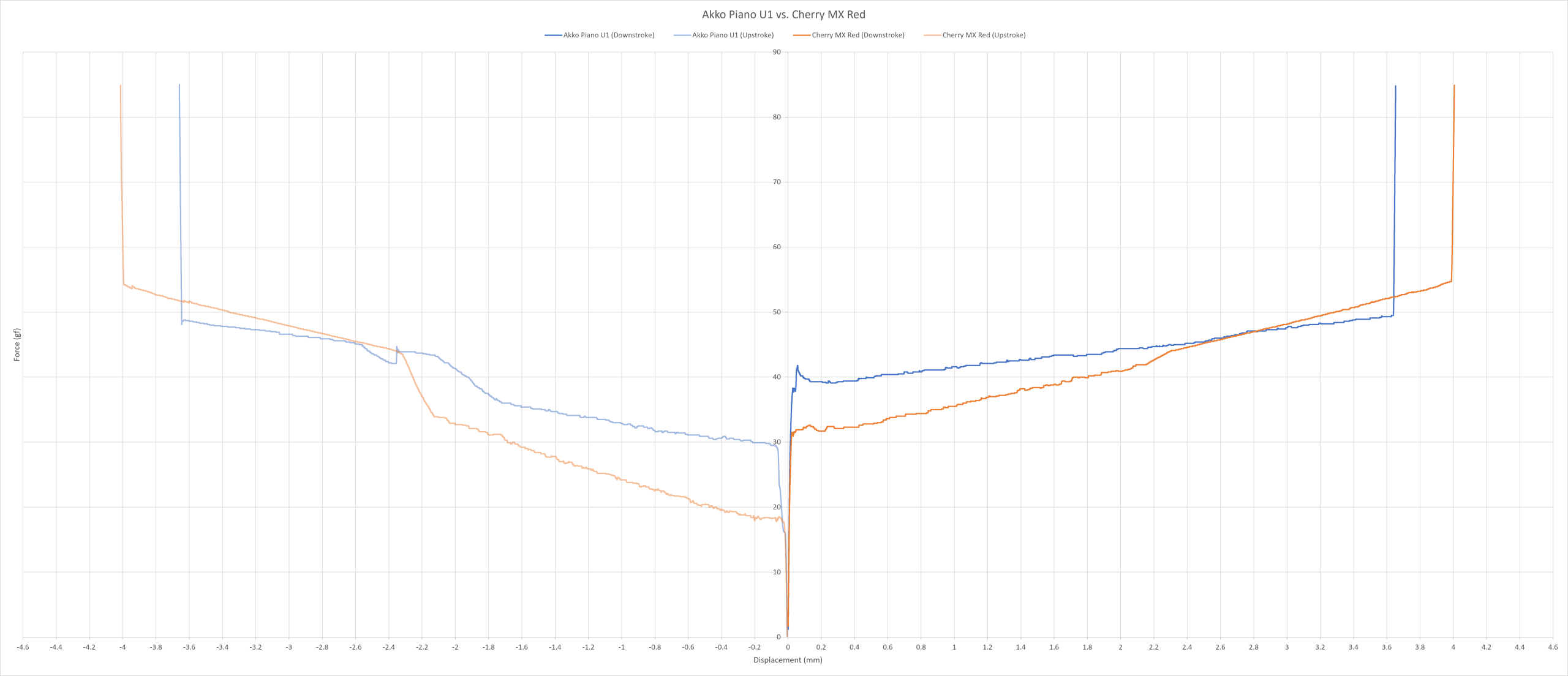
Akko Piano U1 vs. Cherry MX Red force curve.
The force curve above shows the comparison between the Akko Piano U1 and the Cherry MX Red. The Piano switch starts off roughly 8g heavier than the MX Red, but there is a crossover point in the downstroke around 2.9mm where the MX Red becomes heavier towards the end of its travel.
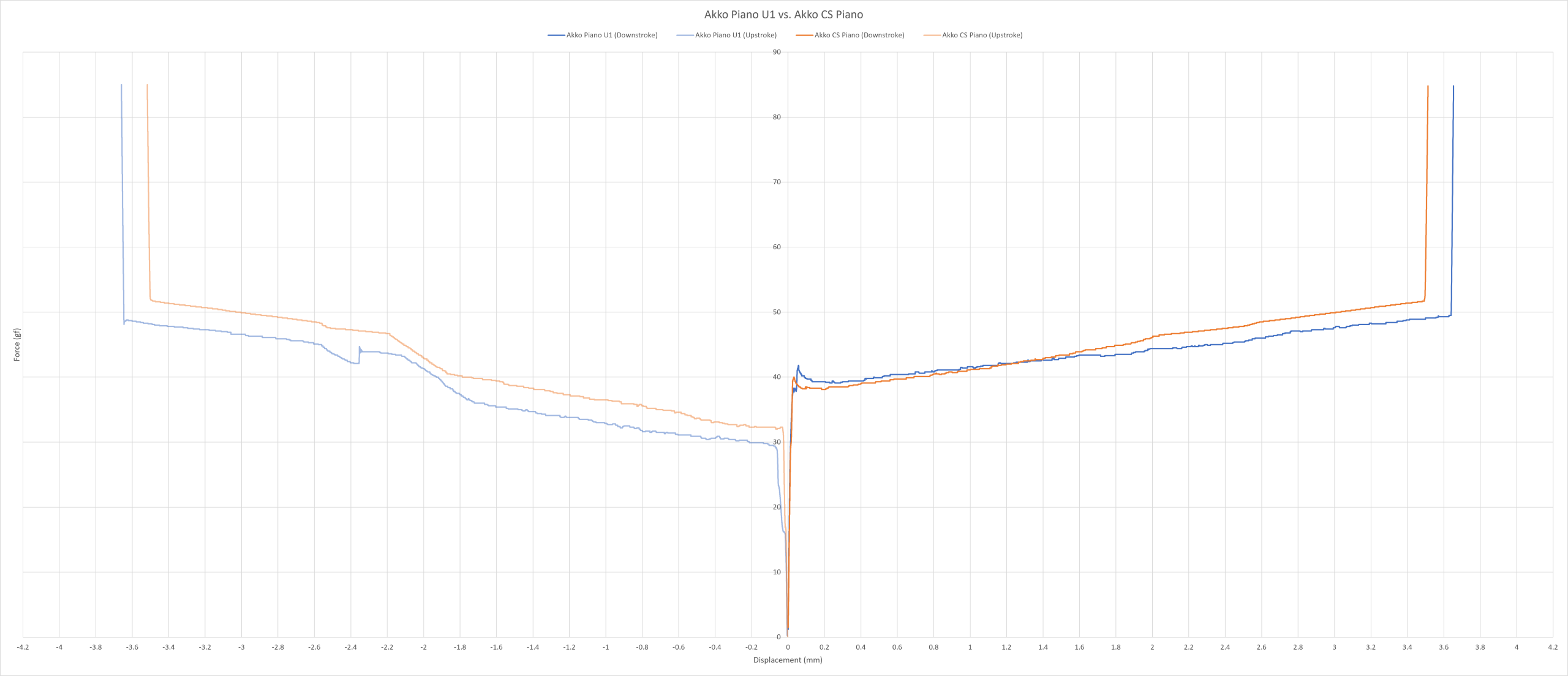
Akko Piano U1 vs. Akko CS Piano force curve.
The force curve above shows the comparison between the Akko Piano U1 and the Akko CS Piano. They have an almost identical weighting on the downstroke with a difference of roughly 3g between the two at any time. Although the CS Piano has a slightly heavier upstroke throughout.
Overall, these are very consistent, lightly weighted switches with a slightly shorter travel. These aren’t for me as I personally like heavier switches, but they’re a pretty good replacement switch if you’re coming from a scratchy MX clone or if you’re just getting started in the hobby.
Sound: 7/10
These are definitely up there on the “clacky” scale, and I like that!
I always assume a less clacky switch whenever they’re lubed, but that’s clearly not the case here. Perhaps the LY stem has something to do with it, but I can’t be sure.
Overall, if you like the sound of a ‘traditionally clacky’ switch, then you’d like the sound of these.
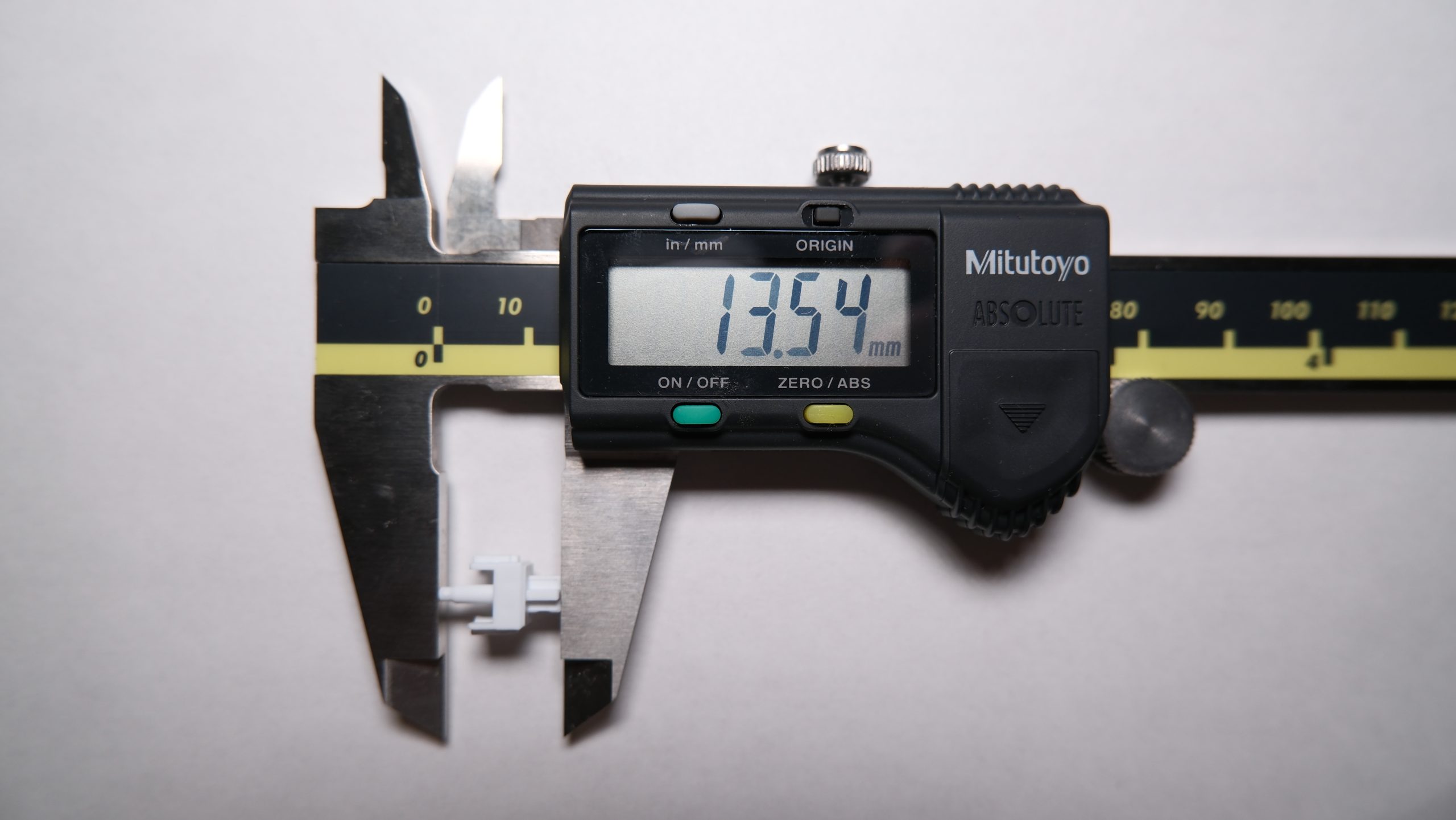
The Akko Piano U1 stem length is 13.54mm.
Typing Performance: 6/10
These are as bog standard as it gets in the modern climate.
They’re smooth enough, consistent enough, cheap enough, and available enough for most people. And I don’t mind that in a bad way – that’s a good thing even, but it doesn’t really offer enthusiasts to be excited about, apart from the LY stem, perhaps… but even then, I’m not particularly enthused about it. What about you, though?
Anyway, as per most of Akko switches, they’re really nice to type on. They performed very smoothly and consistently throughout my testing. However, I made more typos than usual given their light weighting, but it’s otherwise all positives from me.
Overall, it doesn’t really deviate much from the original CS Piano. The formula is almost the same with only a few changes – it’s more of a side grade rather than an upgrade per se.
Gaming Performance: 7/10
These performed great in fast-paced games with barely any issues to report. Although their light weighting meant I pressed keys by accident.
Additionally, they also performed quite well in slower-paced games. Although I didn’t find them to be as accurate as other switches – there were times where I felt the switches had slightly different actuation points depending how fast I pressed them.
Overall, they had some inconsistency issues here and there, but nothing I would consider to be too major for a casual gamer.
Final Score = 34/50 (68%)